
Featured Resources
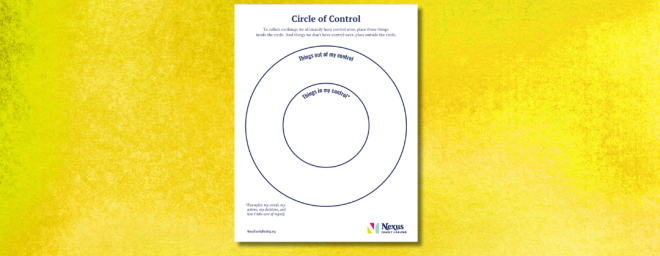
Circle of Control
Use our Circle of Control worksheet to help you reflect on things you ultimately have control over compared to things you don't.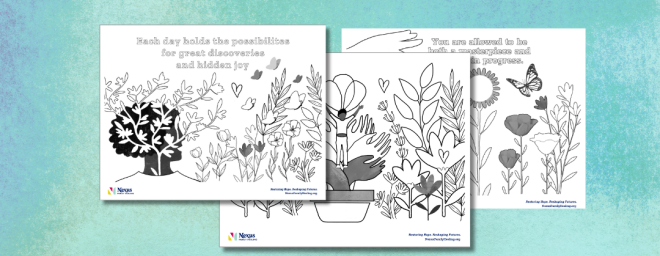
Works of Heart Coloring Pages
Give your brain a break and find some inspiration with our "Works of Heart” coloring pages. Download, print, and share our four hope-filled designs.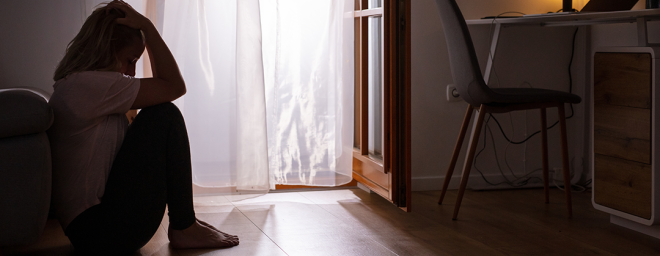
When Is It a Mental Health Crisis?
We all have good and bad mental health days. When our mental health suffers, it affects our ability to think, feel, and act. Any one of us can experience a mental health crisis and crises can be triggered by certain events such as job loss, school pressures, or a break-up; death of a loved one; financial insecurity; medication changes; physical, sexual, or verbal abuse; or trauma.Additional Resources

Zoom Fatigue or Something More?
There are many advantages to holding zoom meetings-no travel time needed, no reason to compete for available conference room space, and the meeting can be easily recorded and archived. With so many efficiencies using technology, why are so many of us feeling exhausted and fatigued? Here are three factors that may be contributing to our feelings of Zoom fatigue and how we might mitigate them.
Exhale: A Mindful Breathing Video
Marjorie D. Grevious guides us through a a mindful breathing.
My Sister’s Lies Have Torn My Family Apart
I'm the oldest of three adult siblings. My youngest sister, “Sue” was diagnosed with chronic depression, bipolar disorder, and within the past year, narcissistic personality disorder. Since the narcissistic diagnosis, she's stopped seeing her psychiatrist and stopped taking her medication. She's always had issues with pathological lying but I recently found out she has been lying to my other sister and parents about me for years - hurtful, relationship-damaging lies my family believed and she continues to tell to this day. My heart is extremely heavy because I'm contemplating severing ties with her. I know her behavior is largely because of her mental illness but I feel I need to emotionally protect myself from her. I'm at a loss for what to do.
Support, One Day at a Time
This past year has been many things – it has been challenging, emotional, overwhelming, stressful, and yet it has also been inspiring and rewarding. There is no doubt about it, we have all had to change not only how we do our work but adjust our personal lives due to new stress and worry that we’ve never navigated before. How do we manage all of this and still be the very best possible version of ourselves?
My Significant Other Doesn’t Believe Me When I Tell Her I Have A Mental Illness
My significant other doesn't believe me when I tell her I have a mental illness. It is really affecting our relationship as she doesn't respect me when I tell her I need extra time or space. How else can I show her what I am going through?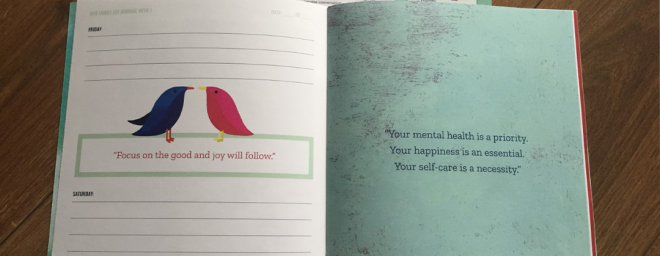
Why Keep a Joy Journal
Many of us are familiar with the concept of gratitude and thankfulness. Science says that feelings of gratefulness have many positive effects – from physical to psychological – making it the most popular topic for daily journals. At Nexus Family Healing, we see many youth and families who are going through difficult times and struggle to see the good in every day. That’s why we champion the practice of keeping a “joy journal.”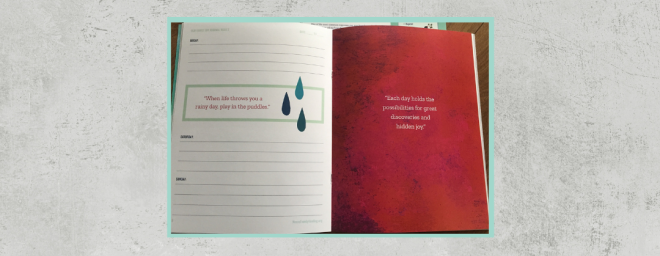
Family Joy Journal
A four-week journal to share positive notes with your family each day.
When Is It a Mental Health Crisis?
We all have good and bad mental health days. When our mental health suffers, it affects our ability to think, feel, and act. Any one of us can experience a mental health crisis and crises can be triggered by certain events such as job loss, school pressures, or a break-up; death of a loved one; financial insecurity; medication changes; physical, sexual, or verbal abuse; or trauma.