
For Mental Health Awareness Month and Foster Care Awareness Month, Nexus Family Healing is providing tools, activities, and guidance to support mental health in families of all kinds.
Mental health can mean a lot of different things. This month, we are focusing on three important areas that families can work on and practice at home – building resilience, communication skills, and creating supportive behaviors and networks. Our experts at Nexus Family Healing have shared many resources to help families support each other in their mental health journeys.
Building Resilience
Resiliency is the ability to cope successfully with the stresses of life. Take a look at these blog posts to learn more about how you can help build resiliency within your family.
Cultivating Conversations
One of the best ways we can reduce the stigma about mental health is by talking more about it. We know having mental health conversations can be difficult at any age, so our experts at Nexus Family Healing have provided the following resources to help you and your family have genuine and healthy conversations about your emotions based on truth, mutual respect, and understanding.
Conversation Starters
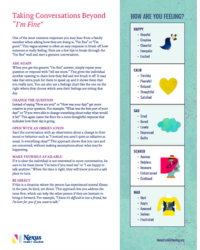
One of the most common responses you may hear from a family member when asking how they are doing is, “I’m fine”. This vague answer is often an easy response to brush off how someone is really feeling. Here are a few tips on how to start a genuine conversation.
Download Conversation Starters
Feelings Tic-Tac-Toe
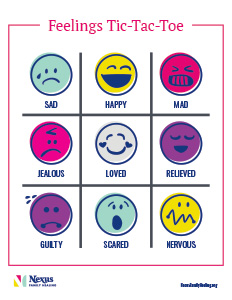
For younger children, learning and understanding their different emotions can take some practice. Use this Tic-Tac-Toe game sheet to help your child identify the many feelings they may experience, how those emotions feel in their own brain and body, and recall a time when they felt that emotion.
Hard Conversations with Teens
Talking about our own feelings, and in particular suicide, can be uncomfortable and overwhelming. Learn how to engage teens in a valuable, yet difficult conversation.
Family Joy Journal

A joy journal provides you an opportunity to identify one thing that made you smile, laugh, or feel a little lighter each day. Our four-week journal helps you share and track daily positive notes with your family.
Feelings Dice Game
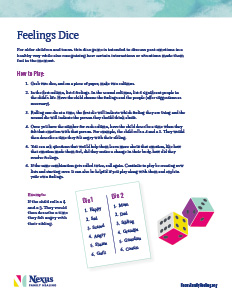
For older children and teens, this dice game is intended to discuss past emotions in a healthy way while also recognizing how certain interactions or situations made them feel in the moment.
Blog Posts
Getting your child to open up and participate in a genuine conversation can be difficult. Read our blog posts about how to cultivate tough conversations with your children.
Creating a Support System
Healing isn't linear. Every person’s journey is different, especially when it comes to mental health and well-being. Creating supportive behaviors and networks can help your family when healing doesn't happen how we had planned or hoped. The following resources provide guidance on how you can support your family's mental health journey.
Support Before Therapy Starts
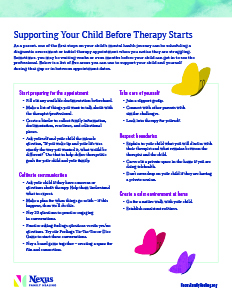
As a parent, one of the first steps on your child’s mental health journey can be scheduling a diagnostic assessment or initial therapy appointment when you notice they are struggling. Sometimes, you may be waiting weeks or even months before your child can get in to see the professional. This is a list of five areas you can use to support your child and yourself during that gap or in between appointment dates.
Blog Posts
Starting therapy can feel intimidating for anyone their first time, but knowing what to expect can help. The following blog posts can help your family as you prepare for therapy.