Featured Resources
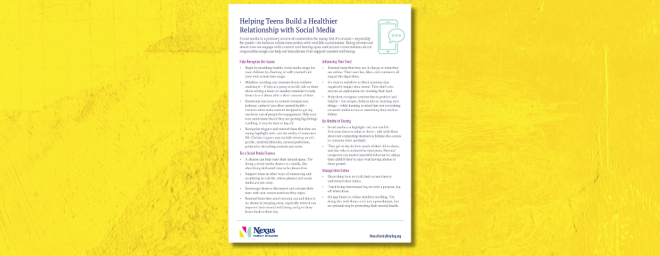
Helping Teens Build a Healthier Relationship with Social Media
Social media is a primary source of connection for many, but it’s crucial—especially for youth—to balance online interaction with real-life socialization. Being intentional about how we engage with content and having open and honest conversations about responsible usage can help set boundaries that support mental well-being.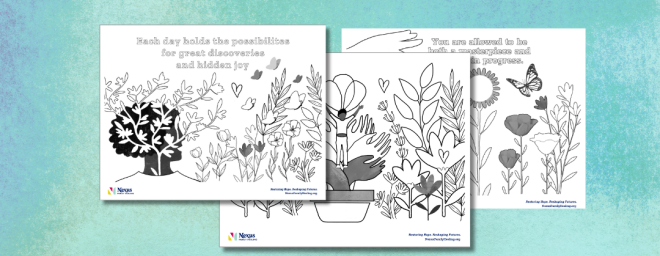
Works of Heart Coloring Pages
Give your brain a break and find some inspiration with our "Works of Heart” coloring pages. Download, print, and share our four hope-filled designs.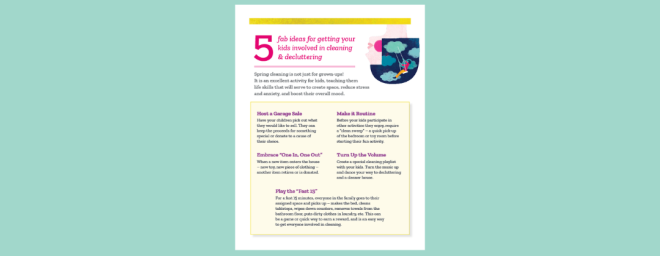
5 Fab Ideas: Kids & Spring Cleaning
Encourage your family to take part in spring cleaning while teaching them life skills to create space, reduce stress and anxiety, and boost their overall mood with these five activities.Additional Resources

Teen Angst or Something More?
The teen years can be a challenge for both teens and parents. The moodiness that often accompanies teens' hormone changes, power struggles, school, and peer stress and emerging independence can be difficult to navigate.
Child Abuse Books Reading List
April is Child Abuse Prevention Month. Here at Nexus Family Healing, our employees, therapists, and foster parents continuously work with youth who have experienced different types of trauma, which often include abuse or neglect. We’ve compiled a list of books that speak about child abuse and trauma that may be fitting for children of different ages.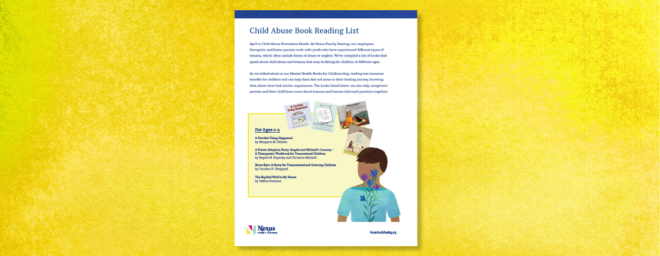
Child Abuse and Trauma Reading List
A list of books to help caregivers/parents and their child learn more about child abuse, trauma, and trauma-informed practices together.
Understanding Childhood Trauma
You may have heard phrases such as “childhood trauma” or “traumatic experience”. But what really is trauma? And how does it affect us? Unfortunately, childhood trauma is incredibly common as one in four children in our community will experience a traumatic event before the age of 16.
Childhood Trauma Is Not Just a Mental Health Problem
Exposure to continuous trauma causes the body’s alarm system to be easily triggered, releasing stress hormones that interfere with reasoning and activate that flight, fight, or freeze response. Children cannot learn or get along with friends or family members when living in a constant state of fight, flight or freeze. Rather, their goal is to survive.
What to Pack in Your Family Emergency Bag
Prepare a family emergency bag with your children to reassure safety and protection in case of an emergency.
What Is Self-Harm?
Luke Spiegelhoff, Clinical Director Specialist, shares information on the types of self-harm, warning signs, differences between self-harm and suicidal ideation, and how to help someone who struggles with self-harm.
The Best-of Dear Dr. Michelle
We started the Dear Dr. Michelle advice column at the height of COVID as an additional way to provide free, accessible help to those who may need it while navigating our new environment. As we transition back to pre-pandemic days, our Dear Dr. Michelle column is coming to a close. As a final hurrah, we wanted to share a list of our top ten most visited advice articles over the past two and half years.