Mental Health in the Classroom
This guide provides talking points and tips for teachers who may have students struggling with their mental health in the classroom.

Nexus Family Healing
Restoring Hope. Reshaping Futures.

Categories
Filter By
search
This guide provides talking points and tips for teachers who may have students struggling with their mental health in the classroom.
These handy little helpers can remind your child they are not alone. Worry Buddies can go with your child anywhere they go, always there to help them cope and take on your child's worries so they can move forward.
Back-to-school season often brings nerves, adjustment, and a bit of chaos as families return to routines and prepare for the year ahead. In today’s post-pandemic school environment, these transitions can feel even more complex. Here are five tips to help families navigate the back-to-school season together.
Have you ever found yourself scrolling on social media and realizing hours have passed? Mindless scrolling can sometimes negatively impact mental health. Here are some tips to help you take control of your social media use and create a healthier online experience.
Have you ever wondered why people make certain choices or behave the way they do? Choice Theory suggests that behavior is purposeful and aimed at meeting five basic needs: survival, love and belonging, power, freedom, and fun.
Making time to decompress, breathe, and release tension can bring positive changes to your physical and mental health, and your ability to handle daily obstacles and stress. Restorative yoga works to deeply relax the body, creating more space for healing, while calming and balancing the mind. It can be a great tool to teach children who need help managing their emotions. The beauty of this type of yoga is anyone can do it regardless of flexibility, fitness level, or yoga experience – you simply have to find comfort and breathe.
The words you speak to yourself have the power to push you forward or tear you down. Positive affirmations can alter your internal self-talk and motivate you to change or take action. Affirmations can include quotes that inspire you, expressions of gratitude, or can directly relate to things your struggle with.
As life returns to a more familiar rhythm, many people are feeling the emotional impact of the pandemic’s disruption. While there are messages encouraging us to relax and “exhale,” it can feel difficult or even unsettling to fully let go after so much unpredictability.
Affirmations are positive statements that can alter your internal self-talk and motivate you to change or take action. These powerful words can boost self-confidence, reset your thinking, and support your mental health during challenging situations. Create your own affirmations with this easy, family-friendly activity!
Power struggles are not enjoyable – when two people or parties are competing for control or influence, it makes for a very uncomfortable and frustrating experience. The more we can self-regulate the better we will be at dealing with difficult situations. Check out four strategies that will help guide you to avoid power struggles.
This past year has been both challenging and rewarding, bringing stress, change, and new emotional demands in both work and personal life. Many are now asking how to manage it all while still striving to be their best selves.
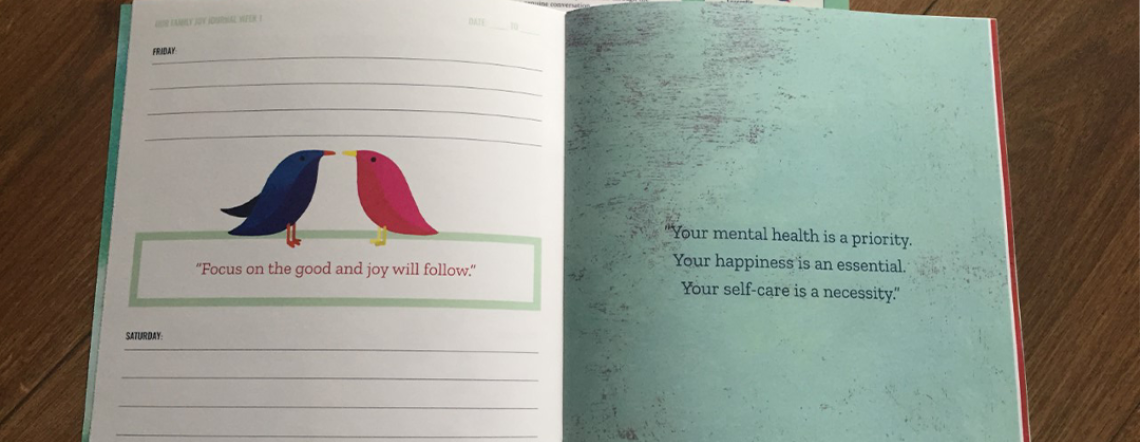
Many people are familiar with gratitude and its benefits for both physical and mental health. At Nexus Family Healing, we support youth and families through difficult times and encourage practices like keeping a “joy journal” to help notice and reflect on positive moments each day.
Conversation startersto get past the generic “I’m fine” response and learn more about how your family is feeling.
I am an adoptive parent and an adoption professional, licensed for foster care solely for adoption purposes. The children who joined my family had already been in foster placements and came to us as new family members. I’m deeply grateful to foster parents and the impact they’ve had on my child.
A four-week journal to share positive notes with your family each day.
A 31-day calendar with daily activities for strengthening family well-being.
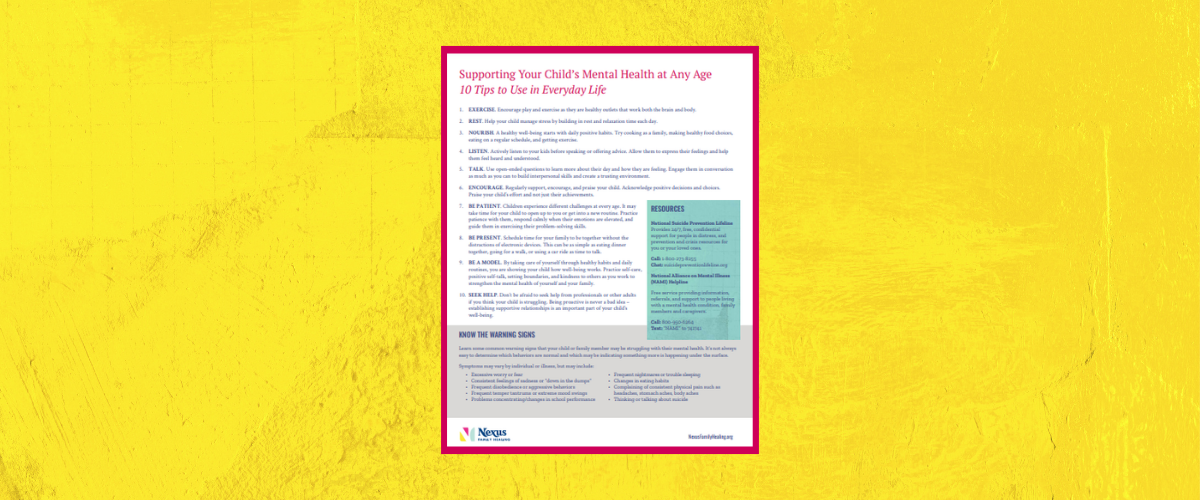
A resource sheet explaining warning signs to watch for and 10 steps to supporting your child’s mental health.
We all experience both good and bad mental health days, and when mental health is impacted, it can affect how we think, feel, and act. A mental health crisis can happen to anyone and may be triggered by stressors such as loss, trauma, or major life changes.
The journey to foster parenting is so special and worth it. I see struggling families daily through my work at a nonprofit agency. I see the generational cycle of poverty and trauma. I see how this affects children and often ask why we can’t do something about this.
Distance learning can create anxiety for both students and parents, with many caregivers feeling responsible when grades drop or stress increases. If you’re feeling overwhelmed or worried, know that you’re not alone. Here are a few quick tips to help manage those moments of stress.
We can practice being trauma-informed in daily life by approaching interactions with openness and curiosity. When we remember we don’t know what someone has been through, it can lead to more compassionate conversations and stronger relationships.
Our call to adoption started with when my mother fostered children while I was growing up. I never understand why she did it until 10 years later after I attended a foster parent training. It is not always easy, but we can no longer imagine our world any other way.
This school year has been unlike any other with all of the unexpected challenges and unknowns. It is normal for your child to feel unexpected increased anxiety about school. Here are five steps to help your child feel more confident and in control when heading back to school.
Trauma-informed care is important because trauma can impact brain development and shape emotional and cognitive functioning. To effectively support and treat individuals who have experienced trauma, providers need to understand how it influences thinking, behavior, and responses.

Resources provided through our website are informational in nature and not meant to take the place of consulting your physician, mental health professional, or other qualified health providers regarding your well-being or the well-being of others.